


Whether you need hormone replacement therapy after a hysterectomy depends on one thing above all others: whether your ovaries were removed along with your uterus. If both ovaries were removed, you enter surgical menopause immediately, and doctors usually recommend starting hormone therapy soon after surgery. If your ovaries were left in place, they keep producing estrogen, and most women do not need hormone therapy unless symptoms show up.
Because the uterus is gone, the form of therapy is also simpler. Women without a uterus take estrogen-only therapy, since progesterone exists mainly to protect the uterine lining. Below we walk through what gets removed in each type of hysterectomy, what surgical menopause actually does to your body, which hormones get replaced, when to start, how long to stay on therapy, what the current safety evidence says, and how we decide whether a dose is right.
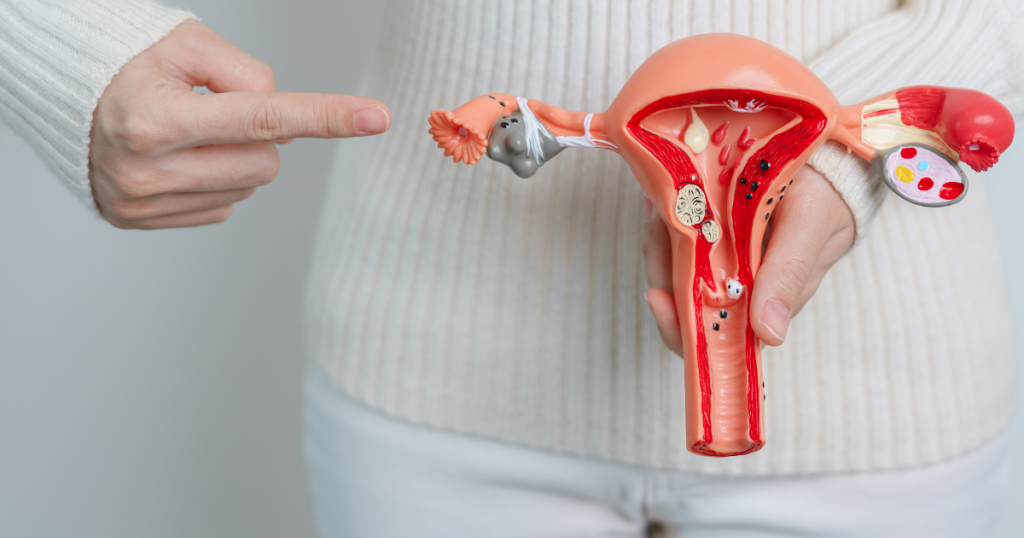
What is left behind after a hysterectomy depends on the type of surgery, but the ovaries are the organs that decide whether you need hormone replacement therapy. A hysterectomy removes the uterus. Depending on the procedure, it may also remove the cervix, the fallopian tubes, or one or both ovaries.
Removal of an ovary is a separate procedure called an oophorectomy. An oophorectomy can be unilateral, meaning one ovary, or bilateral, meaning both. Bilateral oophorectomy is the version that changes your hormones permanently, because the ovaries produce roughly 95 percent of a premenopausal woman's circulating estrogen along with a meaningful share of her testosterone.
This surgery is far more common than most women realize. Data from the National Center for Health Statistics shows that 14.6 percent of American women aged 18 and older have had a hysterectomy, rising from 2.8 percent of women aged 18 to 44 to 22.1 percent of women aged 45 to 64. The Centers for Disease Control and Prevention reports that roughly 600,000 hysterectomies are performed in the United States each year, and that 55 percent of them have historically included a bilateral oophorectomy.
A hysterectomy causes menopause only when both ovaries are removed at the same time. Removing the uterus alone stops your periods, but it does not stop ovarian hormone production, so your body keeps making estrogen and progesterone on its normal cycle.
Ovarian hormone production is what defines menopause, not menstrual bleeding. That distinction matters because women who keep their ovaries often assume they are already menopausal and misread later symptoms. CDC surveillance found that 52 percent of hysterectomies were performed on women younger than 44, which means a large share of patients are decades away from natural menopause on the day of surgery. Those perimenopause symptoms still arrive on their own schedule later, just without the bleeding changes that usually announce them.
Surgical menopause is menopause that begins immediately after both ovaries are removed, rather than developing gradually over several years. The difference between surgical menopause and natural menopause is speed: estrogen falls to postmenopausal levels within hours instead of declining across five to ten years.
That speed is what makes the symptoms sharper. Estrogen loss that fast gives the brain, bones, blood vessels and vaginal tissue no adjustment period. Women describe hot flashes, night sweats, brain fog, joint pain and vaginal dryness arriving within days of surgery rather than creeping in over seasons.
The terminology around the surgery itself causes a lot of confusion, so it helps to separate the two decisions. A partial hysterectomy removes the uterus and leaves the cervix. A total hysterectomy removes the uterus and the cervix. A radical hysterectomy removes the uterus, cervix and surrounding tissue, usually for cancer. None of those terms tells you anything about your ovaries. A woman can have a total hysterectomy and keep both ovaries, and a woman can have a partial hysterectomy with a bilateral oophorectomy. The operative note, not the label, is what answers the hormone question.
Yes, you usually need hormone replacement therapy after a hysterectomy and oophorectomy, and the recommendation gets stronger the younger you were at surgery. When both ovaries come out before the natural age of menopause, hormone therapy is replacing hormones your body would still be making, not supplementing hormones it has finished producing.
The Menopause Society puts this plainly in its 2022 position statement. For women whose menopause is induced before age 45, and especially before 40, hormone therapy is recommended at least until roughly age 52, the median age of natural menopause, unless a specific contraindication exists. The society also states that results from the Women's Health Initiative in older women do not apply to this younger group.
Age drives the risk math in the other direction too. Research published in the Archives of Internal Medicine found that women who had their ovaries removed before age 45 were 1.7 times as likely to die from any cause as women who kept them. Much of the fear around hormone therapy traces back to the 2002 Women's Health Initiative, where the average participant was 63 years old and more than a decade past menopause. A 40-year-old waking up from surgery is in a different biological situation entirely, which is why we treat early surgical menopause as a hormonal imbalance that needs correcting rather than a life stage to wait out.
You usually do not need HRT if your ovaries were not removed, because your ovaries keep producing estrogen and progesterone on their own. Symptoms, not the surgery itself, decide whether a woman with conserved ovaries starts hormone therapy.
There is one wrinkle worth knowing. Removing the uterus reduces blood flow to the ovaries, and the menopause clinical literature consistently reports that women with conserved ovaries reach natural menopause one to four years earlier than they otherwise would have. Earlier menopause without the usual signal of changing periods means symptoms often arrive before a woman expects them and get blamed on stress, thyroid problems or sleep disorders instead.
The signs of low estrogen after a hysterectomy are hot flashes, night sweats, vaginal dryness, brain fog, joint pain, mood changes, disrupted sleep and urinary urgency. These symptoms cluster, which is part of how we recognize the pattern.
Hot flashes are the most reported of the group. Clinical reviews estimate that one in four menopausal women experiences hot flashes severe enough to interfere with daily life, and that number runs higher in surgical menopause because of how abruptly estrogen withdraws.
Vaginal dryness, burning, painful intercourse and urinary urgency belong to a related condition called genitourinary syndrome of menopause, or GSM. GSM happens because the tissue lining the vagina, urethra and bladder neck is estrogen-dependent and thins as estrogen falls. Unlike hot flashes, which often fade over years, GSM is progressive and tends to worsen without treatment.
Fatigue rounds out the picture and is the symptom most often dismissed. Estrogen influences mitochondrial function, sleep architecture and thyroid hormone conversion, so low energy after surgery frequently has a hormonal driver underneath it rather than a purely emotional one.
If you don't do hormone therapy after a hysterectomy that included removal of both ovaries, symptoms continue and bone density, cardiovascular health and cognitive function lose the protection estrogen provides. The effects build quietly over years rather than appearing all at once.
Bone is where the numbers are clearest. A study of 513 women published in the journal Menopause found that women in surgical menopause lost spinal bone density at an annual rate of 3.72 to 7.93 percent in the early years, compared with 1.75 to 4.65 percent in women going through spontaneous menopause. Cumulative spinal bone loss reached 25.8 percent in the surgical group versus 21.8 percent in the spontaneous group. For comparison, research in the Journal of Obstetrics and Gynaecology Research puts typical bone loss after natural menopause at roughly 2.5 to 3 percent per year.
Cardiovascular and metabolic health shift in parallel. Estrogen helps regulate how the body stores fat and how blood vessel linings respond to pressure changes. When it drops suddenly, fat redistributes toward the abdomen and insulin resistance rises, which is why women frequently notice body composition changes within the first year even when their eating has not changed.
The British Menopause Society summarizes the long-term picture for surgical menopause as higher rates of overall mortality, coronary heart disease, stroke, cognitive impairment, osteoporosis and sexual dysfunction when it goes untreated in younger women. Treating it early is part of the same conversation as anti-aging medicine, because the goal is preserving function you still have rather than rebuilding function you have already lost.
No, you do not need progesterone after a hysterectomy in most cases, because progesterone's primary job in hormone therapy is protecting the uterine lining from overgrowth, and there is no uterine lining left to protect. This is the reason women without a uterus take estrogen-only therapy rather than combined therapy.
The protection progesterone provides is specific. Estrogen stimulates the endometrium to thicken, and unopposed stimulation over time raises the risk of endometrial hyperplasia and uterine cancer. Progesterone keeps that lining thin. Remove the uterus, and the entire mechanism becomes irrelevant.
Exceptions exist and they are worth naming. Women with residual endometriosis may need progesterone to keep remaining tissue from responding to estrogen. Some women use micronized progesterone for its sedating effect on sleep, since it acts on the same brain receptors as calming neurotransmitters. These are secondary purposes rather than the primary protective purpose, and they are decided case by case as part of a wider look at hormone balance.
Testosterone helps after a hysterectomy when both ovaries were removed, because the ovaries produce a significant portion of a woman's testosterone alongside estrogen. Losing them cuts testosterone sharply, not just estrogen.
Testosterone influences libido, energy, muscle mass, cognitive sharpness, bone density and mood in women. The Endometriosis Foundation specifically identifies testosterone replacement as a benefit for women who undergo hysterectomy with ovary removal, citing improvements in energy, libido, cognitive performance, bone health and cardiovascular protection.
Despite that, testosterone is the hormone most often left out of post-surgical planning. A woman whose hot flashes resolved on estrogen but whose drive, motivation and mental clarity never came back is often describing a testosterone gap rather than an estrogen dosing problem.
The best hormone replacement after a hysterectomy is estrogen-only therapy, and the best delivery route is the one matched to your symptoms, your clotting risk and your liver health. There is no single product that wins for every woman.
Estrogen-only therapy is the consensus choice because it delivers the symptom relief and the bone and cardiovascular protection without the added progestogen that a woman with a uterus would need. The Menopause Society notes that longer duration tends to be more favorable for estrogen-alone therapy than for combined estrogen-progestogen therapy, based on the Women's Health Initiative trial data.
The types of HRT after a hysterectomy fall into two categories: systemic therapy, which circulates through the bloodstream and treats whole-body symptoms, and low-dose local therapy, which treats vaginal and urinary tissue with very little estrogen entering circulation. The Menopause Society groups the available routes as tablets, transdermal patches, gels, creams, sprays, vaginal rings and pellets. The comparison below reflects how those routes differ in practice, drawing on Menopause Society guidance and the Women's Health Initiative trial data.
Delivery routeHow it enters the bodyTreats bestClot risk profilePasses through the liver firstOral tabletSwallowed, absorbed through the digestive tractHot flashes, night sweats, bone protectionHighest of the systemic routesYesTransdermal patchAbsorbed steadily through the skinHot flashes, night sweats, sleep, steady blood levelsLower than oralNoGel or sprayAbsorbed through the skin, applied dailyWhole-body symptoms with flexible dosingLower than oralNoVaginal ring (systemic dose)Released into vaginal tissue, enters circulationWhole-body symptoms plus vaginal tissueLower than oralNoLow-dose vaginal estrogenApplied locally as cream, tablet or ringVaginal dryness, painful intercourse, urinary urgencyLowest of all routesNoPellet or implantInserted under the skin, releases over monthsWomen who prefer not to dose dailyLower than oral, harder to adjustNo
Low-dose vaginal estrogen sits in its own category for a reason. Because so little estrogen reaches the bloodstream, it carries the smallest risk profile of any form and can often be used by women who are not candidates for systemic therapy. Women dealing with GSM alongside whole-body symptoms sometimes use both at once. The practical differences between these types of HRT are what make the route decision worth real discussion rather than a default prescription.
A patch is better than a pill for women with clotting risk, liver concerns or migraines, while a pill is reasonable for women without those factors who prefer the simplicity. The deciding factor is first-pass liver metabolism.
Oral estrogen travels from the gut to the liver before reaching the rest of the body. The liver responds by increasing production of clotting proteins, which is why oral routes carry a higher clot risk than skin-based routes. Transdermal estrogen enters the bloodstream directly through the skin and bypasses that step, which is why patches, gels and sprays carry a lower clot risk and put less stress on the liver.
Steadiness is the other difference. A patch releases estrogen continuously, while a daily tablet creates a peak and a trough across each 24 hour cycle. Women sensitive to fluctuation, including those whose night sweats or mood dips follow a predictable daily rhythm, usually do better on a steady-release route.
You should start HRT soon after surgery if both ovaries were removed, and the ideal timing for everyone else is within 10 years of menopause onset or before age 60. Starting inside that window is where the benefit-to-risk balance is most favorable.
The Menopause Society frames this as risk stratification by age and time since menopause. For women under 60 or within 10 years of menopause onset who have no contraindications, the benefit-risk ratio favors treatment of bothersome vasomotor symptoms and prevention of bone loss. For women starting more than 10 years out or after 60, the same society notes that absolute risks of coronary heart disease, stroke, clotting and dementia are greater.
For bilateral oophorectomy, waiting has its own cost. Estrogen withdrawal is immediate, so a gap between surgery and therapy is a gap in protection for bone and blood vessels. The Menopause Society also notes that estrogen therapy may carry cognitive benefits specifically when it is started right after hysterectomy with bilateral oophorectomy. That is why the right time to have this conversation is before the operation, not weeks after it. At our Bingham Farms office we would rather map out the hormone plan while a patient is still scheduling surgery than start from scratch once symptoms are already disrupting her sleep.
The sequence we follow looks like this:
Women who kept their ovaries follow a different path and start only once symptoms appear. Knowing when to start is a judgment call built on symptoms and testing rather than a date on a calendar.
How long you stay on HRT after a hysterectomy depends on your age at surgery, and women whose menopause was induced before 45 are advised to stay on therapy at least until roughly age 52. That figure is the median age of natural menopause, and the logic is replacement rather than treatment: until 52, therapy is giving you hormones your body would still have been producing.
After 52, the decision becomes an ongoing one rather than a finished one. The Menopause Society's 2022 position statement explicitly states that hormone therapy does not need to be routinely discontinued in women over 60 or 65, and that continuation should be based on individual risk factors and health status rather than a fixed stopping age. A 2024 retrospective analysis the society highlighted found participants had been on hormone therapy for an average of 18 years, with 42 percent using it regularly for more than 20 years.
You do not need to take hormone therapy forever after a hysterectomy, though many women choose to continue well past the age of natural menopause. The older advice to use the lowest dose for the shortest possible time has shifted toward individualized duration with periodic reassessment.
What changes over time is the reason for taking it. In your forties it is replacement. In your fifties it becomes symptom control and bone protection. In your sixties and beyond it is a benefit-versus-risk judgment made with your own history in front of you.
Stopping also deserves planning. Estrogen withdrawal can bring symptoms back, and the mood changes and sleep disruption that return are often the reason women restart within months of quitting abruptly.
HRT is safe after 60 for many women, though the benefit-risk balance is less favorable than it is for women who start earlier. The distinction that matters most is between continuing therapy you already take and initiating it for the first time at that age.
Continuing established therapy past 60 is supported by current guidance when symptoms persist and no new contraindications have appeared. Initiating therapy more than 10 years after menopause onset carries greater absolute risks of coronary heart disease, stroke, clotting and dementia, according to the Menopause Society.
Route selection carries more weight at this age. Transdermal delivery and lower doses both reduce risk, which makes a patch or gel the usual preference for women over 60 who need systemic therapy.
To replace estrogen naturally after a hysterectomy, you support the body's remaining hormone production and reduce the load working against it through diet, resistance training, sleep, stress reduction and lowering toxic exposures. These approaches can ease symptoms meaningfully, but no natural method restores the estrogen lost when both ovaries are removed.
That honesty matters. After bilateral oophorectomy, ovarian estrogen production is gone, and what remains is a small amount converted from adrenal precursors in fat and muscle tissue. Natural support works with that remainder. It does not recreate what the ovaries produced. For women who kept their ovaries, the picture is better, because the goal is supporting glands that are still working.
The approaches with real evidence behind them include:
This is the part of care where naturopathic medicine does its most useful work, because the variables are behavioral and they compound over years rather than weeks.
One more factor gets overlooked. Many household products, plastics, pesticides and personal care items contain compounds that disrupt hormone signaling, and reducing that toxic burden takes pressure off a system that is already short on hormones. Lowering exposure will not replace estrogen, but it removes interference from the hormones you still have.
Estrogen-only therapy is safe for most women after a hysterectomy, and the evidence on estrogen alone is considerably more reassuring than the evidence on combined estrogen-progestogen therapy. Much of the public fear attached to hormone therapy came from trial data on combined therapy and was applied to estrogen alone without the data supporting it.
The Women's Health Initiative ran two separate trials, and the estrogen-only arm enrolled 10,739 postmenopausal women who had already had a hysterectomy. That population matches our reader exactly. At 20 years of follow-up, results published in JAMA by Chlebowski and colleagues in 2020 showed that women randomized to conjugated equine estrogen alone had a lower breast cancer incidence than women on placebo, at an annualized rate of 0.30 percent versus 0.37 percent, with a hazard ratio of 0.78. Breast cancer mortality was also lower, with a hazard ratio of 0.60. The authors noted that estrogen alone is, to their knowledge, the first drug intervention shown in a randomized trial to significantly reduce deaths from breast cancer.
Regulators have since caught up with that evidence. On November 10, 2025, the US Food and Drug Administration announced it was initiating removal of the broad boxed warnings linking menopausal hormone therapy to cardiovascular disease, breast cancer and probable dementia, following a scientific literature review, an expert panel and a public comment period. The FDA has since approved labeling changes on the first products. The one boxed warning the agency kept is the endometrial cancer warning on systemic estrogen-alone products, which applies to women who still have a uterus. If your uterus has been removed, that warning does not describe your situation.
Real risks remain and they deserve accurate scale. The Women's Health Initiative found estrogen therapy raised stroke incidence from 32 per 10,000 women per year to 44 per 10,000 women per year, an absolute increase of 12 women in 10,000. Clotting risk is higher with oral routes than with transdermal routes. Hormone therapy is generally avoided with a personal history of breast cancer, a history of blood clots, active liver disease or uncontrolled high blood pressure. Those are specific conditions to screen for, which is a different thing from a general warning aimed at every woman.
Against those numbers sit the benefits. Hormone therapy reduces hot flash frequency by roughly 75 percent, which takes a woman having 24 hot flashes a week down to about six. It slows bone loss and reduces fracture risk, and the Menopause Society continues to identify it as the most effective treatment available for vasomotor symptoms.
You know your hormone dose is right when your symptoms have resolved, your lab values sit in a healthy range for your age, and you have no side effects from the therapy itself. All three have to be true at once. Labs alone are not enough, and symptoms alone are not enough.
Symptom tracking does the first job. Hot flash frequency, sleep quality, energy through the afternoon, mood stability, libido, joint comfort and vaginal comfort each respond on their own timeline. Vasomotor symptoms usually improve within two to four weeks. Vaginal tissue, mood and cognitive clarity often take two to three months. Bone changes take longer than that and are measured by scan rather than by feel.
Testing does the second job. We use advanced testing to look at estradiol, testosterone, thyroid function, adrenal output and the nutrient status that hormone metabolism depends on, rather than checking a single estrogen number in isolation. Hormones operate as a connected system, and a woman whose estrogen looks adequate but whose thyroid conversion is impaired will still feel exhausted.
Side effects do the third job. Breast tenderness, headaches, nausea, bloating and spotting generally signal a dose that is too high or a route that is not suiting the person. Returning hot flashes, worsening sleep and renewed vaginal dryness signal a dose that is too low. Both are correctable, and both are reasons to reassess rather than to quit.
Follow-up is what turns a prescription into actual care. We reassess at six to eight weeks after starting, adjust from there, and then review annually, because the dose that works at 45 is rarely the dose that works at 58. That ongoing adjustment is how we rebalance hormones over time rather than setting a number once and leaving it.
You may gain weight after a hysterectomy if both ovaries were removed, because estrogen loss shifts how the body stores fat and how it responds to insulin. Fat tends to redistribute toward the abdomen even when calorie intake has not changed. Resistance training, protein intake and blood sugar stability do more to counter this than calorie restriction alone. Women who keep their ovaries typically do not see this shift until natural menopause arrives.
The body appearance changes after a hysterectomy mainly when both ovaries were removed, through shifts in body composition, skin and hair. Estrogen supports collagen production, so skin can become drier and thinner within the first year of surgical menopause. Muscle mass declines more easily and abdominal fat increases more readily. Hormone therapy and resistance training both slow these changes measurably.
HRT helps with sleep after a hysterectomy, largely by eliminating the night sweats that fragment sleep in the first place. Estrogen also influences the brain's temperature regulation and serotonin signaling, both of which affect how easily sleep is initiated and maintained. Women often report sleep improvement within two to four weeks of starting therapy, around the same timeline as hot flash relief.
You can take HRT after a hysterectomy for endometriosis, though progesterone is sometimes added even without a uterus present. Endometrial tissue outside the uterus can remain after surgery and still respond to estrogen stimulation. The Endometriosis Foundation notes that women with later-stage endometriosis may be advised to supplement progesterone alongside estrogen for this reason. This is one of the clearest exceptions to the estrogen-only rule.
HRT helps with brain fog after a hysterectomy for many women, particularly when it is started soon after surgery. Estrogen receptors are densely distributed through the hippocampus and prefrontal cortex, regions that handle memory and executive function. The Menopause Society notes that estrogen therapy may carry cognitive benefits when started immediately following hysterectomy with bilateral oophorectomy. Hormone therapy is not recommended at any age purely to prevent or treat cognitive decline.
You can stop HRT suddenly after a hysterectomy, but tapering is usually more comfortable. Abrupt withdrawal recreates a smaller version of the hormone drop that happened at surgery, so hot flashes, sleep disruption and mood changes can return quickly and intensely. Gradual dose reduction over several months gives the body time to adjust. Any stopping plan is worth making with your provider rather than on your own.
Hormone replacement therapy after a hysterectomy comes down to a single question answered by your operative report: were your ovaries removed. If they were, you entered surgical menopause the day of surgery, estrogen-only therapy is the standard form, and starting early protects bone, blood vessels and cognition during years when your body would otherwise still be producing those hormones. If your ovaries were conserved, you likely do not need therapy right now, but natural menopause tends to arrive one to four years earlier than it otherwise would, so symptoms are worth watching for.
The evidence has moved considerably in the last few years, and the picture for estrogen alone after hysterectomy is better than the headlines most women grew up with. What has not changed is that dose, route and duration have to be matched to the individual, tested rather than guessed at, and revisited as you age. If you are preparing for a hysterectomy or already managing symptoms after one, we are glad to talk it through with you at Cutler Integrative Medicine in Bingham Farms, where we serve women across Oakland County and the greater Detroit area. You are also welcome to call us directly at (248) 663-0165.







Cutler Integrative Medicine blends naturopathic and conventional care to treat the root causes of illness. Through personalized wellness plans, advanced diagnostics, and holistic therapies.


Copyright © 2025 Cutler Integrative Medicine. All Rights Reserved.