.avif)



.avif)


.webp)



Perimenopause is the transitional phase before menopause when hormone levels fluctuate, typically lasting 4 to 8 years and starting in a person's mid-to-late 40s. The full list of perimenopause symptoms spans common physical symptoms like irregular periods, hot flashes and night sweats, sleep problems, weight changes, and physical discomfort including breast tenderness, headaches, joint pain, and bloating. Mental and emotional changes include mood shifts with increased anxiety, irritability, and mood swings, brain fog with trouble concentrating and mild memory lapses, and fatigue from low energy and shifting hormone levels. Genitourinary and sexual changes include vaginal dryness, bladder issues like frequent urination or higher risk of urinary tract infections, and reduced or altered sexual desire. Less common symptoms include tinnitus, dry skin, adult acne, thinning hair, and heart palpitations. The medical community recognizes 34 or more distinct perimenopause symptoms, with some sources identifying up to 60. This article covers the complete symptom list organized by category, explains why each symptom occurs, identifies which conditions mimic perimenopause, and outlines when and how to seek treatment.
Perimenopause is the transitional period before menopause when the ovaries gradually produce less estrogen and progesterone, causing a wide range of symptoms that affect the body, brain, and reproductive system. Menopause itself is a single point in time, defined as 12 consecutive months without a menstrual period. Perimenopause is the years-long journey leading up to that point. The average age of onset is the mid-40s, and the median age at the final menstrual period is 52, according to the SWAN (Study of Women's Health Across the Nation) longitudinal study.
The reason perimenopause produces so many symptoms is that estrogen and progesterone receptors exist throughout the entire body, not just in the reproductive organs. Estrogen receptors are found in the brain, bones, heart, blood vessels, skin, bladder, joints, and digestive tract. Progesterone receptors are concentrated in the brain, uterus, and breast tissue. When these hormones fluctuate and decline, every organ system with receptors responds, producing symptoms in areas most people do not associate with hormonal change.
Approximately 80-90% of women experience some symptoms during the menopausal transition, according to a narrative review published in Medicina. The intensity varies widely. Some women notice only mild cycle changes and occasional hot flashes, while others experience symptoms that disrupt sleep, work, relationships, and daily functioning. Approximately 2 million U.S. women begin perimenopause each year, according to a 2025 prevalence study, and 59-65% experience vasomotor, psychological, or urogenital symptoms significant enough to affect quality of life.
The full list of perimenopause symptoms includes 34 or more recognized symptoms spanning physical, emotional and cognitive, and genitourinary categories. The medical community, including Women's Healthcare Associates and The Menopause Charity, identifies at least 34 distinct symptoms. Dr. Aisha Redmond, an OB-GYN at Kaiser Permanente, notes that there are approximately 60 different potential symptoms associated with perimenopause. The following table organizes the most recognized symptoms by body system.
Physical SymptomsEmotional and Cognitive SymptomsGenitourinary and Sexual SymptomsIrregular periodsAnxietyVaginal drynessHot flashesDepressionPainful intercourseNight sweatsMood swingsBladder urgency/frequencyWeight gain (especially midsection)IrritabilityRecurrent urinary tract infectionsJoint pain and stiffnessBrain fog / difficulty concentratingLow libidoHeadaches / migrainesMemory lapsesVaginal atrophyBreast tendernessInsomnia / sleep disturbancesStress incontinenceBloatingPanic attacksVulvovaginal irritationFatigueLow confidence / self-esteem changesHair thinningCrying spellsDry or itchy skinLoss of motivationHeart palpitationsMuscle tension and achesBrittle nailsDigestive changes
This categorization draws from clinical symptom lists published by Women's Healthcare Associates, The Menopause Charity, the Cleveland Clinic, and the University of Utah Health. Not every woman will experience every symptom. The combination of symptoms and their severity depend on individual hormone sensitivity, genetics, stress levels, lifestyle, and overall health.
The physical symptoms of perimenopause include irregular periods, hot flashes, night sweats, weight gain, joint pain, headaches, breast tenderness, bloating, fatigue, hair thinning, dry skin, heart palpitations, muscle aches, brittle nails, and digestive changes. These symptoms occur because estrogen receptors are distributed throughout every major organ system, and declining estrogen disrupts the normal function of tissues that depend on it.
Irregular periods are the most common first sign. Cycles may become shorter, longer, heavier, lighter, or skip months entirely as ovulation becomes unpredictable. The SWAN Daily Hormone Study found that 20% of menstrual cycles in early perimenopausal women were already anovulatory even when cycles appeared regular.
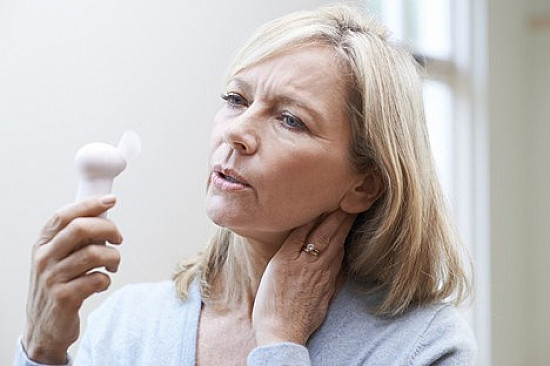
Hot flashes affect approximately 75% of menopausal women, according to Cedars-Sinai, and last an average of 7.4 years per the SWAN study. Hot flashes occur because declining estrogen disrupts the hypothalamus, the brain's temperature regulation center, narrowing the thermoneutral zone so that small changes in body temperature trigger a heat-release response. Night sweats are the same mechanism occurring during sleep, and they significantly disrupt sleep quality.
Weight gain concentrates around the midsection because declining estrogen shifts fat storage patterns from the hips and thighs to the abdomen. Metabolism slows as muscle mass decreases with age and hormonal decline. A root-cause approach to nutrition and weight management helps separate hormonal weight changes from dietary factors.
Joint pain and stiffness occur because estrogen has natural anti-inflammatory properties. As estrogen declines, joint inflammation increases, producing achiness in the hands, knees, hips, and shoulders that many women mistake for early arthritis or simple aging. Headaches and migraines can worsen or appear for the first time because hormonal fluctuations affect blood vessel tone and serotonin levels in the brain.
Yes, perimenopause can cause heart palpitations because fluctuating estrogen levels affect the autonomic nervous system, which controls heart rate and rhythm. Women may feel a fluttering, racing, or skipped-beat sensation in the chest, often during a hot flash or at night. The Menopause Charity lists heart palpitations as a recognized perimenopause symptom. Heart palpitations during perimenopause are usually benign, but any new palpitations should be evaluated by a healthcare provider to rule out thyroid disorders, anemia, or cardiac conditions.
The emotional and cognitive symptoms of perimenopause include anxiety, depression, mood swings, irritability, brain fog, memory lapses, insomnia, panic attacks, crying spells, low confidence, and loss of motivation. These symptoms reflect the direct impact of declining estrogen and progesterone on brain chemistry. Estrogen influences serotonin, dopamine, and norepinephrine production, while progesterone supports the brain's calming GABA (gamma-aminobutyric acid) system.
A Midi Health survey found that 68% of women identified mood changes as one of the first signs of perimenopause, and 63% reported brain fog or forgetfulness as an early symptom. Perimenopausal women are 40% more likely to experience symptoms of depression compared to premenopausal women, according to Midi Health data. These mental health changes are hormonally driven, not character flaws or signs of mental illness.
Brain fog deserves special attention because it causes significant distress. Women describe forgetting words mid-sentence, walking into rooms without remembering why, and struggling to concentrate on tasks that used to feel automatic. The SWAN study found that cognitive changes during perimenopause are modest, variable, and often reversible after the menopausal transition, according to research published in Frontiers in Human Neuroscience. A 2022 International Menopause Society white paper confirmed that brain fog is not a sign of dementia and that cognitive function typically improves once hormone levels stabilize.
Insomnia and sleep disruption compound every other emotional symptom. Poor sleep worsens anxiety, impairs concentration, reduces stress tolerance, and intensifies mood swings. Progesterone converts into allopregnanolone, which activates GABA receptors to promote deep sleep. When progesterone drops, this natural sedative pathway weakens, and sleep becomes lighter and more fragmented.
The genitourinary symptoms of perimenopause include vaginal dryness, painful intercourse (dyspareunia), bladder urgency and frequency, recurrent urinary tract infections (UTIs), low libido, vaginal atrophy, stress incontinence, and vulvovaginal irritation. These symptoms fall under the clinical term Genitourinary Syndrome of Menopause (GSM), and they result from the thinning and drying of vaginal and urinary tract tissues as estrogen declines.
Unlike hot flashes and mood changes, which often improve after menopause, genitourinary symptoms tend to worsen over time because the vaginal and urinary tissues continue to thin without estrogen support. Low-dose vaginal estrogen is the most effective treatment for GSM and carries minimal systemic risk because the estrogen stays localized. Women who experience vaginal dryness, discomfort during intimacy, or frequent UTIs should discuss treatment options rather than accepting these changes as an inevitable part of aging.
The less common symptoms of perimenopause include tinnitus (ringing in the ears), burning mouth sensation, electric shock sensations on the skin, dizziness or vertigo, dry eyes, restless legs, tingling in the hands and feet, changes in taste or smell, bleeding gums, body odor changes, and adult acne. These symptoms appear in clinical symptom lists from The Menopause Charity and Women's Healthcare Associates but are rarely discussed in mainstream perimenopause education.
These less common symptoms often go unrecognized because women and even some providers do not associate them with hormonal change. Comprehensive evaluation through holistic and integrative medicine considers the full scope of symptoms rather than treating each one in isolation.
Yes, perimenopause can cause digestive problems including bloating, gas, changes in bowel habits, acid reflux, and nausea because estrogen and progesterone influence gastrointestinal motility and gut barrier function. Estrogen receptors in the gut affect how quickly food moves through the digestive tract. Fluctuating estrogen can speed up or slow down digestion, producing alternating constipation and loose stools. Cortisol elevation from stress during perimenopause further disrupts gut function, and declining progesterone reduces the calming effect on smooth muscle in the digestive tract.
Perimenopause symptoms typically peak in the late 40s to early 50s, during the 1 to 3 years immediately before the final menstrual period. This late perimenopause phase is when hormone fluctuations are most extreme, anovulatory cycles are most frequent, and symptoms like hot flashes, sleep disruption, and mood instability reach their highest intensity. The SWAN study reported that early menopausal transition begins on average 6 to 8 years before the final menstrual period, with symptoms intensifying as the transition progresses.
Not every woman follows this pattern. Some experience their worst symptoms in early perimenopause when progesterone first drops and estrogen dominance develops. Others have a relatively smooth early transition and then encounter intense symptoms only in the final 1-2 years. Individual variation in hormone sensitivity, genetics, stress load, and overall health determines when the peak occurs.
Perimenopause lasts an average of 4 to 8 years, though it can be as short as a few months or as long as a decade. A 2026 study based on data from more than 17,000 women across 158 countries, published in Menopause, the journal of The Menopause Society, reported an average duration of 6 years. The Cleveland Clinic notes that perimenopause can begin as early as the mid-30s and last up to 10 years. Duration depends on genetics, smoking status (smokers reach menopause 1-2 years earlier), body composition, and overall health. Women dealing with chronic fatigue during this transition should evaluate whether hormonal decline, nutrient deficiency, or thyroid dysfunction is the primary driver.
For most women, perimenopause is harder than menopause because the wild hormonal fluctuations during perimenopause produce more intense and unpredictable symptoms than the stable, low hormone levels of postmenopause. During perimenopause, estrogen spikes and crashes from month to month, and progesterone drops unpredictably. This constant hormonal upheaval drives the symptom roller coaster. Once menopause is reached and hormone levels stabilize at their new baseline, many women report that the worst symptoms ease. Hot flashes decrease in frequency, mood stabilizes, sleep improves, and the sense of unpredictability resolves.
The exception is genitourinary symptoms, which worsen after menopause because vaginal and urinary tissues continue to thin in the absence of estrogen. These symptoms require ongoing management even after the menopausal transition is complete.
Conditions that get mistaken for perimenopause include thyroid disorders, depression, anxiety disorders, ADHD, sleep apnea, iron deficiency anemia, uterine fibroids, and autoimmune conditions. The symptom overlap between perimenopause and these conditions is significant. Fatigue, weight gain, brain fog, and mood changes could indicate an underactive thyroid just as easily as hormonal transition. Heavy periods may result from fibroids rather than hormonal fluctuation alone.
Kaiser Permanente emphasizes that there is no single test to confirm perimenopause, which makes ruling out other conditions especially important. Thyroid issues deserve particular attention because hypothyroidism produces symptoms that are nearly identical to perimenopause: fatigue, weight gain, brain fog, depression, hair thinning, and cold intolerance. Testing thyroid function (TSH, free T3, free T4, thyroid antibodies) alongside reproductive hormones prevents misattribution.
Illnesses that can mimic perimenopause include hypothyroidism, Hashimoto's thyroiditis, polycystic ovary syndrome (PCOS), adrenal insufficiency, vitamin D deficiency, iron deficiency anemia, sleep apnea, clinical depression, generalized anxiety disorder, and ADHD. Each of these conditions shares overlapping symptoms with perimenopause, and several can co-occur with perimenopause, compounding the symptom burden. Comprehensive testing that evaluates hormones, thyroid, nutrients, inflammatory markers, and cortisol simultaneously distinguishes perimenopause from lookalike conditions. Environmental medicine also evaluates whether toxin exposure is contributing to hormonal disruption beyond normal age-related decline.
You can confirm perimenopause by identifying a pattern of characteristic symptoms, tracking menstrual cycle changes over several months, and working with a provider who evaluates the full hormonal and metabolic picture. The Cleveland Clinic notes that most providers diagnose perimenopause based on symptoms, age, and medical history rather than a single lab test. The classic pattern includes menstrual cycle changes (shorter, longer, heavier, or skipped periods) combined with at least one other symptom like hot flashes, sleep disruption, mood changes, or brain fog in a woman in her 40s or 50s.
Tracking your cycles provides the most useful data. Note the start date, duration, flow intensity, and any symptoms that accompany each cycle. Over 3-6 months, a pattern of increasing irregularity confirms the transition. Cycle tracking also helps distinguish perimenopause from conditions with similar presentations, because thyroid disease and PCOS produce different cycle patterns than hormonal transition does.
There is no single test that reliably diagnoses perimenopause because hormone levels fluctuate so dramatically during the transition that a single blood draw provides limited diagnostic value. FSH (follicle-stimulating hormone) testing is sometimes used, but the Cleveland Clinic notes that FSH levels can vary widely even within the same day during perimenopause. A consistently elevated FSH level (above 25 mIU/mL) suggests the ovaries are working harder to stimulate ovulation, which supports a perimenopause diagnosis, but normal FSH does not rule it out.
We use comprehensive panels in our Bingham Farms practice that evaluate estrogen, progesterone, FSH, LH, thyroid markers, cortisol, DHEA, and nutrient status across timed draws. Bio Intelligent Testing evaluates the full hormonal and metabolic landscape rather than relying on a single marker, providing a far more accurate picture of where each patient stands in the transition.
Perimenopause is treated with hormone therapy, bioidentical progesterone, low-dose birth control, targeted medications for specific symptoms, lifestyle modifications, and integrative therapies that address root-cause hormonal imbalance. Treatment should match the specific symptoms, their severity, the patient's health history, and her stage in the transition.
Hormone therapy (HT) remains the most effective treatment for moderate to severe vasomotor symptoms (hot flashes and night sweats), vaginal dryness, and bone loss prevention, according to The Menopause Society. Bioidentical hormone therapy uses plant-derived hormones that are molecularly identical to the body's own estrogen and progesterone, offering a well-tolerated option with fewer side effects than synthetic hormones. The different types of hormone therapy include systemic estrogen (pills, patches, gels), vaginal estrogen (creams, rings, tablets), and oral micronized progesterone.
Low-dose birth control pills stabilize hormone levels and regulate periods while also reducing hot flashes and mood swings. Antidepressants (SSRIs and SNRIs) can reduce hot flash frequency and improve mood for women who cannot take hormone therapy. Gabapentin addresses hot flashes and insomnia. Vaginal estrogen treats genitourinary symptoms with minimal systemic absorption.
Lifestyle modifications make a measurable difference. Regular cardiovascular and resistance exercise protects bone density, improves mood, and supports metabolic health. A nutrient-dense diet rich in calcium, vitamin D, omega-3 fatty acids, and phytoestrogens supports hormonal balance. Stress management through naturopathic medicine approaches like meditation, botanical support, and cortisol management reduces the amplifying effect that chronic stress has on perimenopausal symptoms.
During perimenopause, you should not ignore persistent symptoms, increase alcohol consumption, skip meals, avoid exercise, dismiss mood changes as "just stress," or assume that every symptom is normal aging. Each of these common responses worsens the transition.
Yes, having perimenopause for 10 years falls within the normal range. The average duration is 4 to 8 years, but some women experience symptoms for a full decade, according to the Cleveland Clinic and The Menopause Society. Duration depends on genetics, smoking status, body composition, stress, and overall health. Women who smoke tend to reach menopause 1 to 2 years earlier.
Signs that perimenopause is ending include periods that skip 60 to 90 days or longer, hot flashes that peak and then begin to decrease, increasingly persistent vaginal dryness, and mood fluctuations that gradually stabilize. Once 12 consecutive months pass without a menstrual period, perimenopause has ended and menopause has been reached. Many women find that hormone therapy provides the most relief during this final, most intense phase of the transition.
Yes, most women feel significantly better after perimenopause ends and hormone levels stabilize in postmenopause. The SWAN study confirmed that cognitive changes during perimenopause are often reversible. Hot flashes decrease, mood stabilizes, and sleep improves once the hormonal roller coaster stops. Some symptoms like vaginal dryness may persist and benefit from ongoing treatment, but the overall sense of unpredictability and disruption resolves for most women.
Yes, being 52 and still in perimenopause is completely normal. The median age at the final menstrual period is 52.54 years, according to the SWAN study. Many women are still experiencing irregular periods and perimenopausal symptoms at 52. Some women do not reach menopause until their mid-50s. As long as you are still having periods, even sporadically, you are still in perimenopause.
Yes, pregnancy is still possible during perimenopause. As long as ovulation occurs, even irregularly, conception can happen. Women who do not want to become pregnant should continue using contraception until they have gone 12 full consecutive months without a period. Women who are trying to conceive during perimenopause should seek preconception care to optimize hormone levels and egg quality during this transition.
Perimenopause and thyroid function are closely connected. Declining estrogen can affect thyroid hormone binding and metabolism, and hypothyroidism can worsen perimenopausal symptoms by compounding fatigue, weight gain, brain fog, and mood changes. Testing thyroid function alongside reproductive hormones prevents misdiagnosis and ensures that both conditions are treated if they coexist.
The medical community recognizes at least 34 distinct symptoms of perimenopause, according to Women's Healthcare Associates. The Menopause Charity lists over 50 symptoms in their A-Z index, and Kaiser Permanente's Dr. Redmond identifies approximately 60 potential symptoms. The number continues to grow as research expands the clinical picture of how hormonal decline affects every organ system in the body.
Perimenopause affects far more than just your period. The full list of perimenopause symptoms spans physical, emotional, cognitive, genitourinary, and less common categories, and every woman experiences a different combination at a different intensity. Knowing the complete symptom picture helps you recognize what is happening, seek evaluation sooner, and avoid years of dismissing treatable symptoms as normal aging or stress. Comprehensive testing, symptom tracking, and a root-cause approach to treatment produce the best outcomes.
At Cutler Integrative Medicine, we evaluate the full scope of perimenopause symptoms through advanced hormone, thyroid, nutrient, and metabolic testing. If you are experiencing symptoms that affect your daily life, call us at (248) 663-0165 to schedule a consultation.


.png)




.avif)
Cutler Integrative Medicine blends naturopathic and conventional care to treat the root causes of illness. Through personalized wellness plans, advanced diagnostics, and holistic therapies.
.avif)
.avif)
Copyright © 2025 Cutler Integrative Medicine. All Rights Reserved.
.avif)


.png)

.avif)
.avif)

.avif)
