





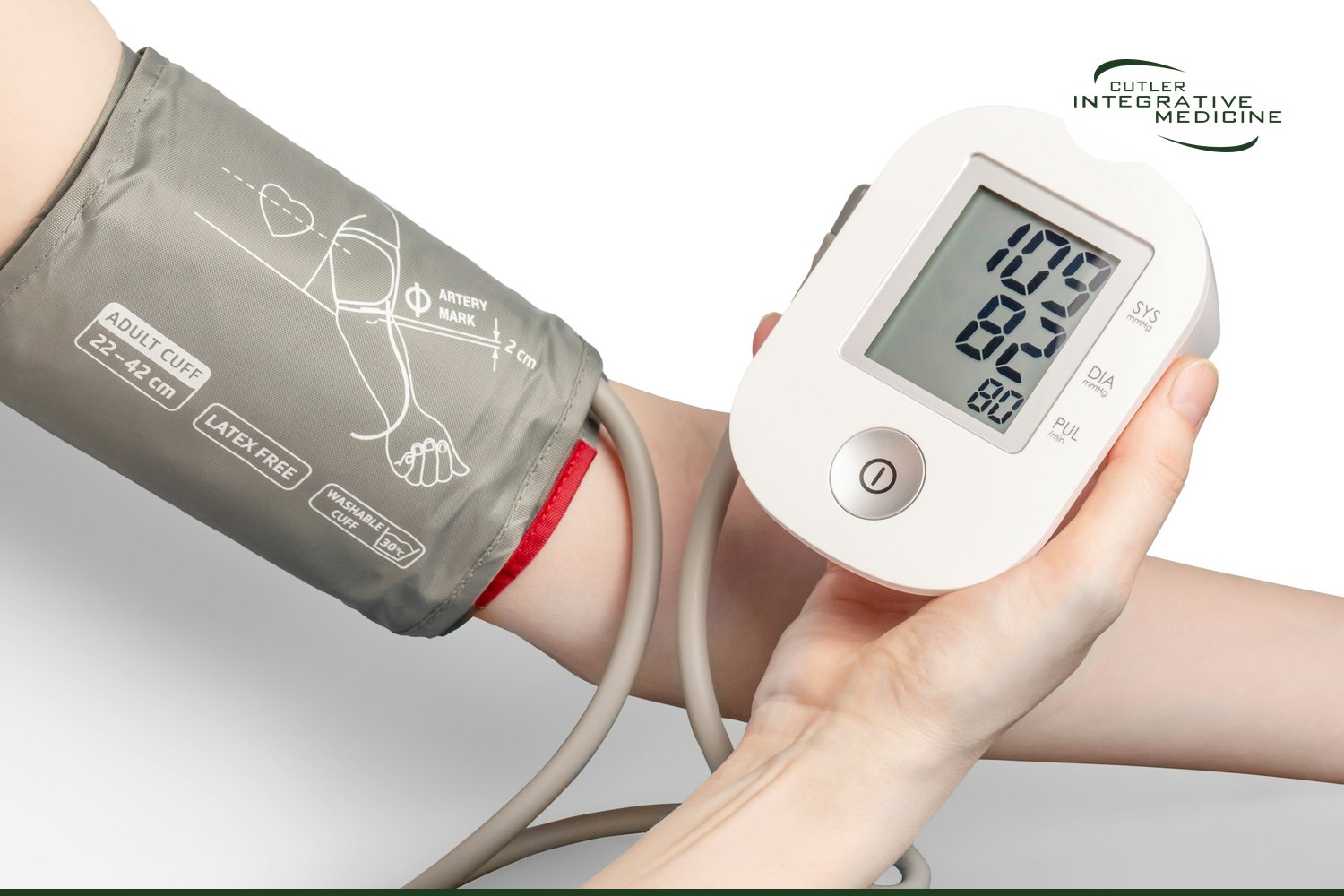
Yes, testosterone replacement therapy (TRT) can raise blood pressure, and the FDA added a class-wide warning in 2025. Ambulatory studies measured 24-hour systolic rises of 1.9 to 3.8 mm Hg, depending on the product. Testosterone replacement therapy and high blood pressure connect through red blood cell counts, so blood pressure and blood count checks matter.
Key Takeaways
Yes, testosterone replacement therapy and high blood pressure are linked, because TRT can cause higher blood pressure in some men. The FDA now lists a warning on every testosterone product. The agency said completed ambulatory blood pressure monitoring (ABPM) studies confirmed an increase with all testosterone products, class-wide. ABPM records blood pressure around the clock instead of in one office visit.
Men with hypertension who want hormone levels checked first can start with hormone balance support and a full lab review. That review gives the prescribing physician a clear baseline.
The size of the rise matters as much as the warning. The next section shows what the trials measured.
The FDA said on February 28, 2025 that it was adding a new increased-blood-pressure warning to testosterone labels. The change followed the TRAVERSE trial and the required ABPM studies. The agency began requiring those studies for every testosterone product in March 2018.
Updated product labels tell patients to measure blood pressure regularly. The labels also say testosterone is not recommended for men with uncontrolled hypertension. The warning states that higher blood pressure can raise cardiovascular risk over time.
The FDA also removed boxed-warning language about adverse cardiovascular outcomes. The agency pointed to TRAVERSE, which found no increase in adverse cardiovascular outcomes in men using testosterone for hypogonadism. Hypogonadism means the body makes too little testosterone.
That split verdict, a blood pressure warning without a heart attack warning, raises the question of size. The numbers come next.
Testosterone replacement therapy raised 24-hour systolic blood pressure by about 1.9 to 3.8 mm Hg in the ABPM trials below. Systolic pressure is the top number in a reading. The rises were small on average, yet averages hide men whose pressure climbed further.
The table lists three product types and the 24-hour systolic change each trial reported.
| Testosterone form | Trial | Length | 24-hour systolic change |
|---|---|---|---|
| 1.62% gel, 246 men | Weber, Andrology 2025 | 16 weeks | Up 1.9 mm Hg |
| Subcutaneous enanthate injection, 133 men | Gittelman, J Sex Med 2019 | 12 weeks (ABPM) | Up 3.7 mm Hg |
| Oral testosterone undecanoate | White, J Cardiovasc Pharmacol Ther 2021 | 4 months | Up 3.8 mm Hg |
The gel trial reported a 95% confidence interval of 0.63 to 3.13 mm Hg, which slightly exceeded its 3 mm Hg margin. The authors said they could not rule out a drug effect on systolic pressure. Diastolic pressure, the bottom number, rose by 1.3 mm Hg with the injection and 1.2 mm Hg with the oral product.

The graphic above compares the same three trials side by side. A rise of a few points matters for men whose readings already sit near the limit. The cause behind it deserves a look.
TRT raises blood pressure mainly through higher hematocrit, the percentage of blood made up of red blood cells. Testosterone stimulates red blood cell production. More red cells make blood thicker, and the heart works harder to move it.
A 2021 trial of oral testosterone undecanoate in hypogonadal men found hematocrit rose by 3.2% on average. Men in the top hematocrit quartile, a rise of 6% to 14%, had a mean systolic increase of 8.3 mm Hg. The other three quartiles averaged 1.9, 3.3, and 2.1 mm Hg.
A 2024 randomized trial in opioid-treated men found office systolic pressure rose 6.2 mm Hg on testosterone. The authors tied that rise to higher hematocrit and said men with obesity or upper-normal red cell levels were more susceptible. Salt and water retention is also discussed as a contributor, although these trials did not measure it.
The authors of the 2021 trial concluded that hematocrit may help predict which men develop larger blood pressure increases. The next section looks at that red cell link directly.
Yes, thick blood from TRT, called erythrocytosis, can raise blood pressure when hematocrit climbs high. The T4DM trial followed 1,007 men aged 50 to 74. Hematocrit topped 54% in 22% of men on testosterone versus 1% on placebo. Doctors treat a level above 54% as the point to act.
Hematocrit shows up on a routine blood count, so lab work, not symptoms, catches it. The American Academy of Family Physicians (AAFP) advises checking hematocrit 3 to 6 months after starting therapy and then yearly. The AAFP says to stop or lower the dose when hematocrit exceeds 54%.
Prescribers can respond by lowering the dose or changing the schedule. The 2019 injection study found hematocrit of 52% or higher in 10 of 133 men, or 7.5%. Dose and delivery form shape those numbers, which leads to the question of injection versus gel.
The graphic below shows the hematocrit link from the oral testosterone trial.

Testosterone injections and high blood pressure are linked in trials. A 2026 Journal of the American Heart Association review found the rise differs by individual product, not by route. Gel, injection, and oral forms all raised pressure on ambulatory monitoring. No route escaped the class-wide FDA warning.
The review also noted that long-term exposure and non-transdermal forms remain untested in outcome trials. TRAVERSE used a 1.62% gel only. Men on injections or pellets therefore rely on smaller studies for cardiovascular data.
One observational registry of 737 men on testosterone undecanoate injections reported falling pressure instead. Median systolic change was minus 12.5 mm Hg in men never on blood pressure drugs. Registry data lack a placebo group, so the randomized ABPM trials carry more weight.
Those mixed results leave a broader worry about the heart itself.
No, testosterone therapy did not raise major heart events in TRAVERSE, but other cardiovascular signals remain. TRAVERSE enrolled 5,246 men aged 45 to 80. Major cardiac events occurred in 7.0% of men on testosterone gel and 7.3% on placebo (hazard ratio 0.96).
The same trial found more atrial fibrillation, acute kidney injury, and pulmonary embolism with testosterone. A pulmonary embolism is a blood clot in the lung. Updated labels carry a venous thromboembolism warning and results from TRAVERSE.
The same 2026 review warned that noninferiority over about three years is not long-term equivalence. Men with heart disease should discuss testosterone with a cardiologist or prescribing physician. Heart risk and blood pressure risk both shape who can start, which is the next question.
Yes, some men with high blood pressure can take TRT, but the pressure must be controlled first. Labels state testosterone is not recommended in men with uncontrolled hypertension. The Centers for Disease Control and Prevention (CDC) defines high blood pressure as readings consistently at or above 130/80 mm Hg.
Men with treated, stable readings may qualify with closer follow-up. The European Association of Urology (EAU) 2025 guidance advises baseline luteinizing hormone, follicle-stimulating hormone, blood pressure, and hematocrit before therapy. It confirms low testosterone as a level below 12 nmol/L on two morning samples.
The decision belongs to the prescribing physician. A male hormone assessment and recent home readings give that visit a firmer starting point. Many of those men already take blood pressure medicine, which raises a practical question.
Yes, men can be on TRT and blood pressure medication together, with the prescriber tracking both. In the oral testosterone undecanoate trial of 155 men, five participants, or 3.2%, started blood pressure medicine. No participant needed a dose increase of existing blood pressure medicine.
The injection registry saw the reverse. Of 202 men on blood pressure drugs, 33 stopped them by the end of follow-up. Neither result is a reason to change a prescription alone.
Men should tell every prescriber about every medicine and supplement. Changes to blood pressure drugs belong with the doctor who prescribes them, and the same goes for stopping testosterone.
No, men should not stop TRT alone when blood pressure runs high, but they should call the prescribing physician promptly. Stopping any hormone abruptly can bring symptoms back. The physician can confirm the reading, review hematocrit, and adjust the dose or form.
Labels tell patients to measure blood pressure regularly. A home cuff gives the physician a pattern instead of one office number. The CDC says readings consistently at or above 130/80 mm Hg count as high.
Men who feel chest pain, severe headache, or sudden weakness should seek emergency care. Everyone else has options for bringing numbers down, covered next.
Lower blood pressure on TRT by combining the CDC and NHLBI lifestyle steps with physician follow-up. The National Heart, Lung, and Blood Institute (NHLBI) says DASH plus low salt can be as effective as medicines. DASH stands for Dietary Approaches to Stop Hypertension.
These five steps are the core of the CDC and NHLBI advice:
Many people need two or more medicines to control hypertension, per NHLBI, so medicine stays an option. Our dietary planning work covers the food side of these steps. The graphic below shows how the steps fit with testing.

Steps pair with a schedule of checks. The following section lays out that schedule.
Check blood pressure before starting and regularly after, and check hematocrit 3 to 6 months after starting, then yearly. The labels call for regular blood pressure measurement. The AAFP sets the hematocrit schedule.
The table below names each check, its timing, and the action point.
| Check | Timing | Action point |
|---|---|---|
| Blood pressure | Before starting, then regularly | 130/80 mm Hg or higher is high (CDC) |
| Hematocrit | 3 to 6 months after starting, then yearly | Above 54% means lower the dose or stop (AAFP) |
| Testosterone level | Three to six months in, then yearly | Mid-normal goal of 400 to 700 ng/dL (AAFP) |
The mid-normal target keeps levels from overshooting. Some men carry extra risk even with that schedule, so the next section names them.
Men with uncontrolled hypertension, high hematocrit, or heart disease need extra caution before and during TRT. The studies and labels above point to these groups:
Men who snore loudly or stop breathing at night can ask about a sleep study. Our sleep disorder evaluation page explains how sleep and hormones interact. Sleep affects both blood pressure and testosterone, so the two are worth reviewing together.
No, testosterone is not an approved treatment for high blood pressure, and the FDA says it raises pressure class-wide. One registry reported falling pressure on injections, but it had no placebo group. Men unsure whether their low testosterone indicators are real can start with that guide.
Yes, the trials above raised average pressure in hypogonadal men generally. In the oral trial, 5 of 155 men (3.2%) started blood pressure medicine. The gel trial found noninferiority in subgroups without hypertension or diabetes. Men with normal readings still need monitoring.
Low testosterone is linked to higher all-cause and cardiovascular mortality. A 2026 review says it likely marks other illness rather than causing it. Obesity, diabetes, and sleep apnea can accompany low levels. Treating those conditions matters whether or not a man uses TRT.
A normal reading is below 120/80 mm Hg, according to the CDC. Readings of 120 to 129 over less than 80 are in the elevated range. Men on TRT can track their numbers with the same home cuff.
Doctors judge testosterone as too high by blood level and hematocrit. The AAFP names a mid-normal goal of 400 to 700 ng/dL. A hematocrit above 54% means lower the dose or stop. The full list of known testosterone drawbacks has its own guide.
Hormone therapy for men carries benefits and risks that depend on diagnosis, dose, and monitoring. Men weighing options can review an overview of men's hormone replacement and discuss it with a physician.
No, the average rises in trials were small, and responses varied by person. Men with higher hematocrit, obesity, or existing hypertension had larger rises in the studies above. Regular home and office readings show how an individual responds.
The CDC lists a diet high in sodium and low in potassium, inactivity, and heavy drinking as behaviors that raise risk. Tobacco use, excess weight, and long-term stress also contribute. Age and family history matter as well.
The prescribing physician or pharmacist should review every medicine and supplement before and during TRT. Men should bring a complete list, including blood pressure drugs and anything taken without a prescription. Do not stop or change a prescription without that review.
Yes, higher testosterone exposure can push hematocrit up, and rising hematocrit tracked with larger pressure rises in trials. Dosing to a mid-normal level of 400 to 700 ng/dL helps avoid overshooting. Blood counts confirm the level stays in range.
Cutler Integrative Medicine supports men by testing hormone levels, finding root causes, and working alongside the physician who prescribes testosterone. We do not prescribe TRT. Our team looks at sleep, stress, nutrition, weight, and thyroid function, all of which can affect blood pressure and hormones.
Dr. Doug Cutler, ND, uses lab-based testing to map hormone and nutrient levels. Those results show where stress, gut health, or nutrition may be working against a man's hormones.
Body weight is one factor tied to larger pressure rises in the studies above. Our holistic weight loss plan builds nutrition and lifestyle habits that support healthy numbers over months, not days. Progress gets reviewed against blood pressure readings, labs, and the guidance of the prescribing physician at each follow-up.
Our functional medicine practitioners review history, labs, and goals together before any plan takes shape. Care is built around the individual man, and telemedicine is available. Men in Bingham Farms and across Metro Detroit can book either way.
Coordination matters when two clinicians share one patient. The Cutler care team coordinates with your prescribing physician so blood pressure, blood counts, and hormone levels stay on the same page. Call (248) 663-0165 to schedule a conversation about hormone testing, lifestyle support, and how the plan fits your physician's care.








Cutler Integrative Medicine blends naturopathic and conventional care to treat the root causes of illness. Through personalized wellness plans, advanced diagnostics, and holistic therapies.


Copyright © 2025 Cutler Integrative Medicine. All Rights Reserved.


