



No, hormone replacement therapy to lose weight is not an approved use. The Menopause Society says weight loss is not an indication for menopause hormone therapy. Estrogen may still limit belly fat, since a meta-analysis of 107 trials found abdominal fat fell 6.8% in postmenopausal women. Calories, activity, and strength training still move the scale.
Key Takeaways
Hormone replacement therapy does not help you lose weight on its own. The Menopause Society states that weight loss is not an indication for menopause hormone therapy. Providers use HRT for hot flashes, night sweats, and bone loss rather than for the scale.
Hormone therapy may still change where fat sits on the body, so hormone care starts with your symptoms and goals. A clear picture of your hormones separates a hormone problem from a habit problem. The next section asks whether you can lose weight while on treatment.
Yes, you can lose weight on hormone replacement therapy, but calories, activity, and sleep drive the loss rather than the hormones. A 2005 randomized trial analyzed 51 women taking conjugated estrogens 0.625 mg with medroxyprogesterone acetate 2.5 mg daily. Weight, total fat, and abdominal fat did not differ from placebo after 2 years.
HRT neither blocked weight loss nor caused it in that trial. Women can lose weight with hormone replacement therapy when they pair treatment with a plan. The plan matters more than the prescription, and the next question shows where hormones do make a difference.
Yes, HRT may reduce belly fat, although it does not lower total weight in every trial. A 2006 meta-analysis of 107 randomized trials found hormone therapy cut abdominal fat by 6.8% in postmenopausal women. Insulin resistance fell 12.9%, and new-onset diabetes risk dropped to a relative risk of 0.7 in women without diabetes.
Visceral fat sits deep around the organs, so these changes matter for metabolic health more than for clothing size. The table below compares three studies on hormone therapy and body fat.
| Study | Participants | Finding |
|---|---|---|
| 2006 meta-analysis | 107 randomized trials | Abdominal fat down 6.8%; insulin resistance down 12.9% |
| 2007 randomized study | 59 women, BMI 25 or higher, 6 months | Waist circumference and subcutaneous fat fell with oral and patch HRT |
| 2005 randomized trial | 51 women analyzed, 2 years | No difference in weight, total fat, or abdominal fat; insulin sensitivity fell 17% |
The table shows mixed results, which is why researchers call for more trials. The 2005 trial found no change in abdominal fat, while the 2007 study found waist size fell within 6 months. Both used small groups, so no single result settles the question.
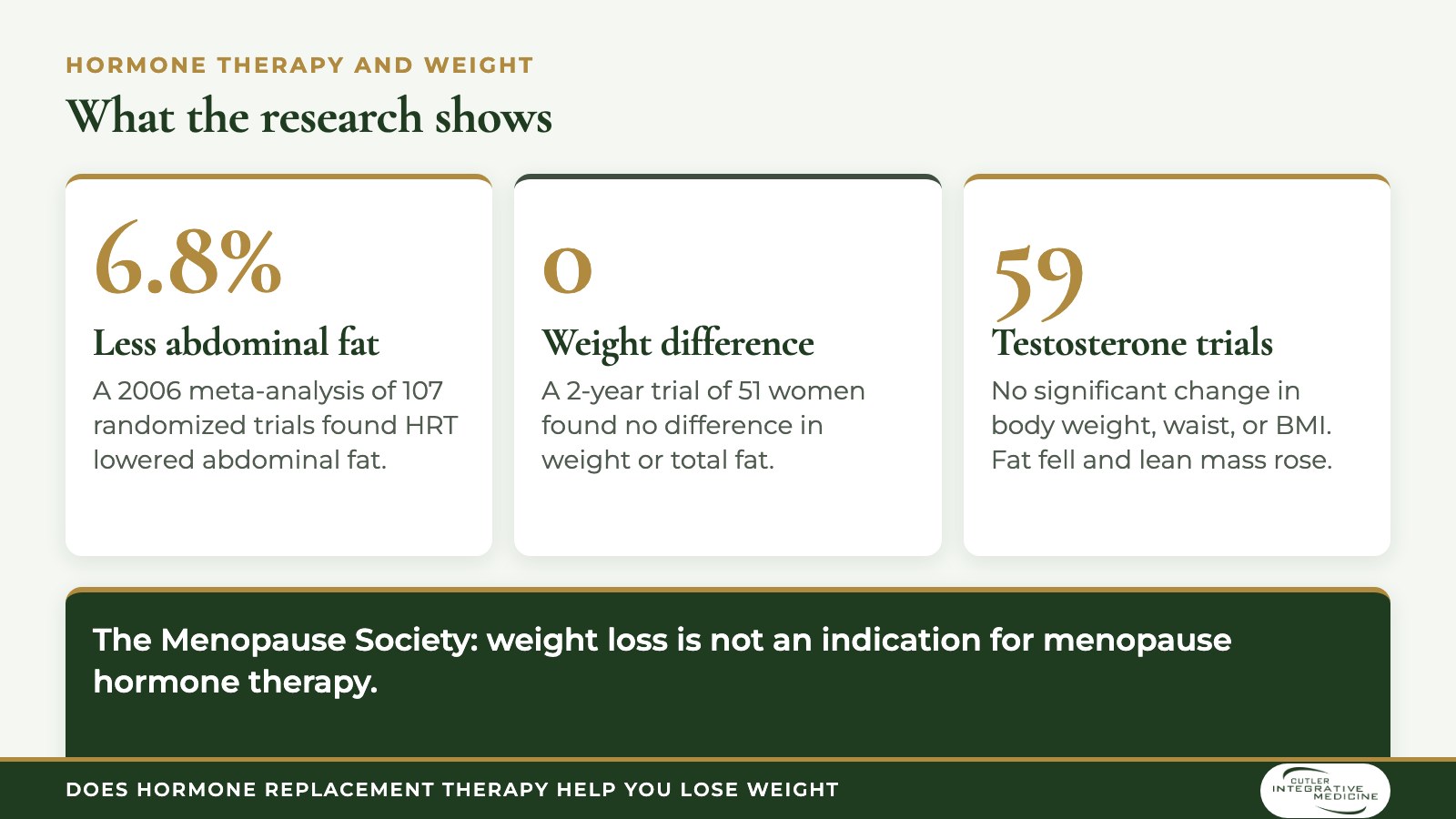
The graphic above summarizes the evidence on weight, belly fat, and testosterone. Menopause changes fat storage in the first place, which explains why belly fat matters.
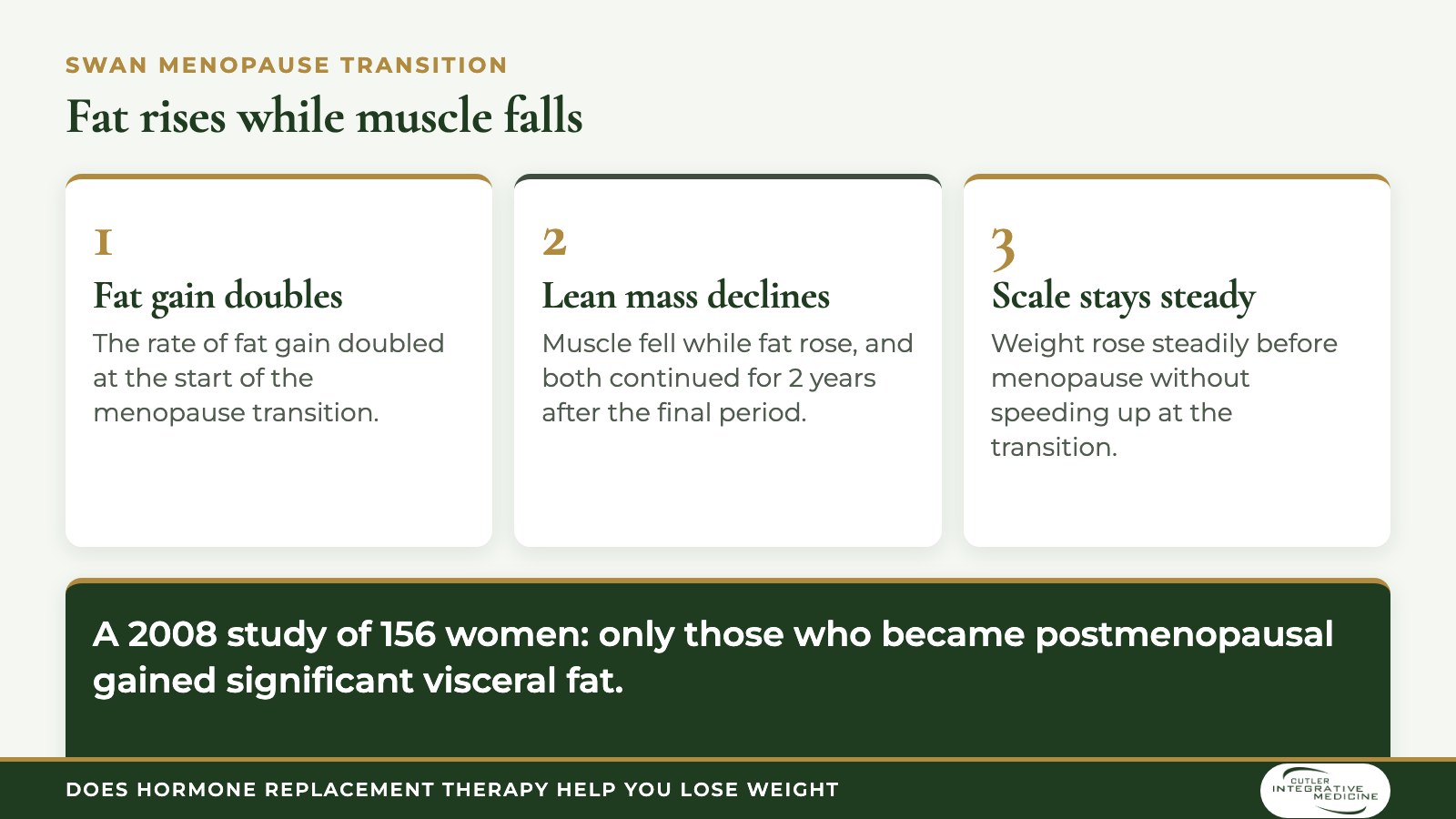
Women gain weight during menopause mainly as fat with less muscle, while the scale changes slowly. The Study of Women's Health Across the Nation (SWAN) found fat gain doubled at the start of the menopause transition. Lean mass declined, and both shifts continued until 2 years after the final period.
Weight itself rose steadily before menopause in SWAN without speeding up at the transition. A 2008 study of 156 women over 4 years found only women who became postmenopausal gained significant visceral fat. Physical activity and energy expenditure fell in that group.
The Menopause Society adds that midlife gains are largely driven by aging, with menopause factors adding fat accumulation and redistribution. Weight shifts like these can be one of many hormone-related symptoms that appear together. Fat gain with muscle loss shapes what any treatment can target. The graphic below shows the SWAN pattern.
No hormone replacement therapy has proof for weight loss, so no type is chosen for that purpose. In the 2007 study, oral and patch estradiol with a progestogen lowered waist size to a similar degree. Providers pick a type by symptoms and risk, and the guide to HRT options explains the options.
Compounded hormones are not FDA-approved, and the FDA does not verify their safety, effectiveness, or quality. Claims that a compounded product helps weight loss have no FDA review behind them. Regulated options leave room for an honest conversation about what hormones can and cannot do.
Hormone therapy may make weight loss easier indirectly, by easing menopause symptoms that get in the way of healthy habits. A 2022 review in The Lancet Diabetes and Endocrinology says hormone therapy has efficacy for symptoms and osteoporosis. The same review says early treatment can improve metabolic and cardiovascular health. Hot flashes and night sweats last a median of 7.4 years in SWAN, so relief matters over a long stretch.
The Menopause Society position statement finds the benefit-risk balance favorable under age 60. The same balance holds within 10 years of menopause onset in women without contraindications. Better comfort does not replace a calorie and activity plan. Men ask the same question about testosterone.
No, testosterone replacement therapy does not change body weight, though it shifts fat and muscle. A 2016 meta-analysis pooled 59 randomized trials, with 3,029 treated participants and 2,049 controls. Body weight, waist circumference, and BMI did not change significantly. Fat mass fell and lean mass rose.
The Testosterone for Diabetes Mellitus (T4DM) trial enrolled 1,007 men aged 50 to 74. All had a waist of 95 cm or more and joined a lifestyle program. After 2 years, 12% of men on testosterone had type 2 diabetes versus 21% on placebo. Hematocrit, the share of red blood cells in blood, passed 54% in 22% of treated men versus 1% on placebo.
The Endocrine Society recommends against starting testosterone with breast or prostate cancer, a palpable prostate nodule, or a PSA above 4 ng/mL. Men with low testosterone symptoms can read about men on testosterone and talk with a prescribing physician about testing first. Another medication class now gets more attention for weight.
Hormone therapy may boost GLP-1 weight loss, but the evidence is observational and unproven. A GLP-1 is a glucagon-like peptide-1 receptor agonist, a medication class used for weight loss. A retrospective cohort study covered nearly 2,400 women on semaglutide and nearly 1,500 on tirzepatide. All were over 45 with a BMI above 27.
Hormone therapy was linked to greater, sustained loss with semaglutide. Tirzepatide end results did not reach statistical significance. The lead author said prospective trials must confirm the finding and that weight loss is not an indication for menopause hormone therapy.
The Menopause Society reports that about one in five women aged 50 to 64 report current or past GLP-1 use. Women using these drugs still need protein, strength training, and a plan, which the next section lays out.
Weight loss after menopause is driven by a calorie deficit, regular activity, strength training, and sleep. The five steps below follow NHS guidance and the research above.
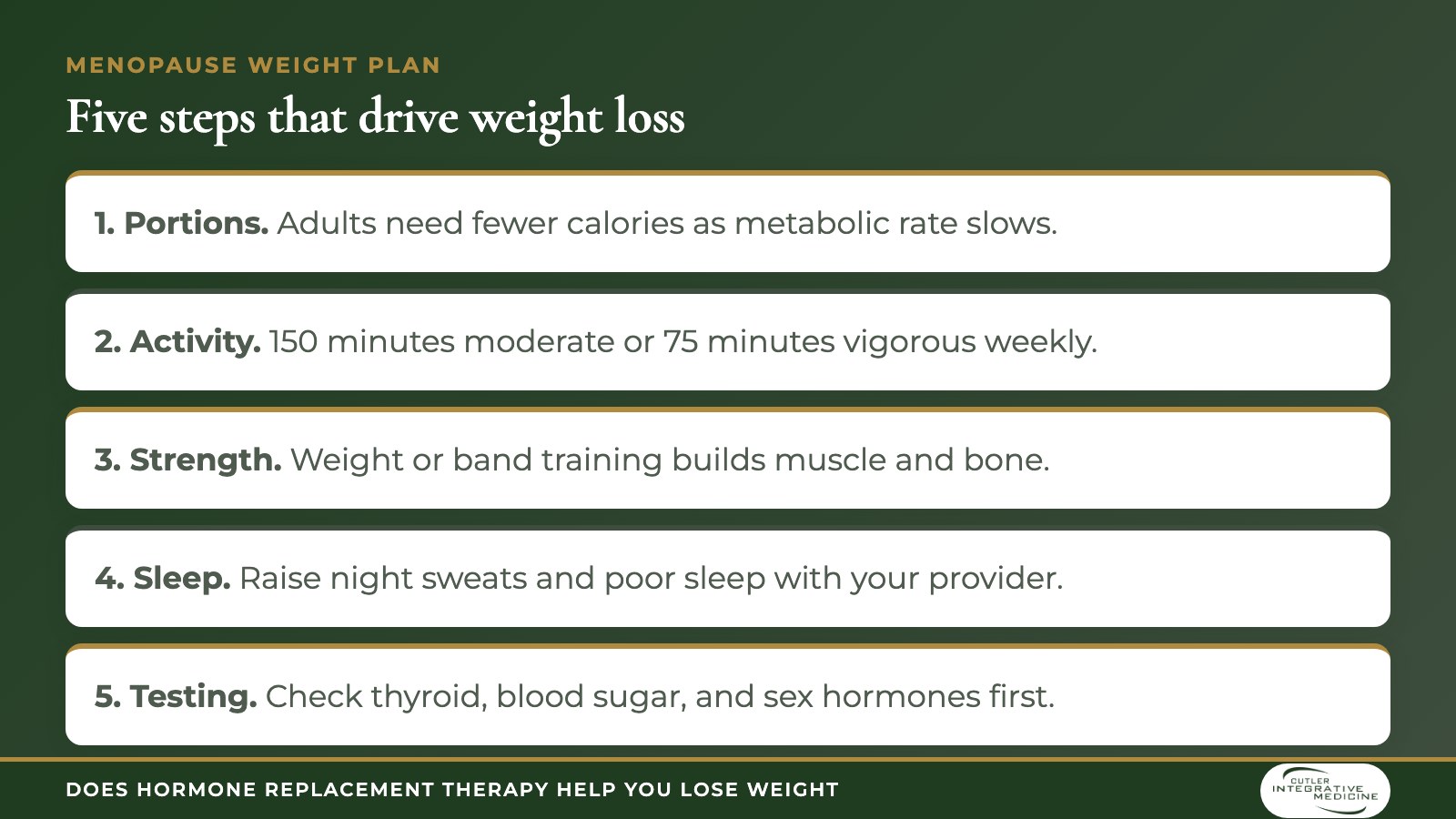
The graphic above shows the five steps in order. Resistance training deserves extra weight because SWAN found lean mass falling during the transition.
Combine HRT with diet and exercise by using hormone therapy for symptoms and habits for weight. Women on HRT should still reach 150 minutes of moderate activity weekly and add strength sessions. Providers can track waist size and body composition rather than the scale alone.
A stalled scale calls for adjustments, and the guide to a weight loss plateau covers them. Measuring waist size every 4 weeks and tracking strength lifts shows progress the scale misses.
Fat loss and muscle gain can offset each other on the scale, which makes body composition the better gauge. Weight that stays high despite steady effort may point to stubborn weight issues tied to hormones. Safety questions come next.
No one should start hormone replacement therapy to lose weight alone, and some people should avoid HRT entirely. The Menopause Society says weight loss is not an indication. Women and men with any of the following conditions should talk to their doctor before any hormone therapy.
The review of HRT risks covers each concern in detail. Starting or stopping any hormone belongs in a conversation with your prescribing physician. Several side questions remain.
No, trials do not show that HRT causes weight gain. The 2005 randomized trial found no weight difference from placebo over 2 years. Readers worried about weight on HRT can review that separate guide.
No evidence here shows that stopping HRT causes weight loss. In the 2005 trial, insulin sensitivity returned to placebo levels one year after women stopped, and weight had not differed between groups. Plan any stop with your prescribing physician.
No single female hormone helps you lose weight, though estrogen influences where fat is stored. A 2012 review says estrogen therapy may partly prevent the menopause-related shift toward abdominal fat. That effect concerns distribution rather than total weight.
No, testosterone is not recommended for weight loss in women. The 2019 Global Consensus Position Statement names hypoactive sexual desire disorder in postmenopausal women as the only evidence-based use. The guide to testosterone for women covers it further.
Waist changes appeared within 6 months in one 59-woman study. A 2-year trial of 51 women found no difference in weight. Timelines vary by person, so measure waist size and strength rather than chasing the scale.
Yes, thyroid hormones help set metabolic rate, so thyroid problems can change weight. A blood panel checks for this cause before anyone assumes sex hormones are responsible. Our page on thyroid health explains how we approach it.
Low estrogen is linked to more abdominal fat rather than to a direct rise in scale weight. A 2012 review ties the menopause hormone shift to increased total and abdominal fat. Aging and lower activity also contribute.
No, HRT does not produce weight loss without diet and exercise. The 2005 trial found no weight difference after 2 years of treatment. Nutrition and movement carry the result.
Hormone tests can point to causes such as thyroid or sex hormone changes. The Cleveland Clinic notes that FSH tests can mislead in perimenopause because hormones rise and fall erratically. Providers read results alongside symptoms.
No, hormone therapy does not replace GLP-1 medications. The Menopause Society calls GLP-1 drugs proven effective for weight loss and says weight loss is not an indication for hormone therapy. Discuss any combination with your doctor.
Cutler Integrative Medicine supports weight changes during hormone shifts through testing, nutrition, and lifestyle plans that work alongside your prescribing physician. Hormone replacement therapy to lose weight is not our approach. We look at root causes such as stress, gut health, thyroid function, toxins, and sleep.
Our hormone balance care includes blood work and saliva adrenal testing, then a plan built around the results.
Nutrition, botanical medicine, and lifestyle changes follow the testing, and each plan fits the patient's age, symptoms, and medication list. Patients keep their prescribing physician involved in any hormone decision, including starting or stopping therapy.
The 4D program adds structured nutrition and weight management for patients in Bingham Farms and by telemedicine.
Structured sessions focus on food quality, movement, stress, and sleep, which are the same drivers this guide covered. Measurements track waist size, strength, and energy so progress does not depend on the scale alone.
Our biointelligent assessments add another layer of testing when symptoms do not match standard labs.
Questions about hormones and weight are welcome from women and men at any stage of midlife. Appointments are available in the office and by telemedicine. Call (248) 663-0165 to speak with Dr. Cutler's practice about your goals.








Cutler Integrative Medicine blends naturopathic and conventional care to treat the root causes of illness. Through personalized wellness plans, advanced diagnostics, and holistic therapies.


Copyright © 2025 Cutler Integrative Medicine. All Rights Reserved.